Guarders BabyPass
Two connected apps that let parents track a baby's health at home and send a urine test, read by the phone camera, straight to their pediatrician.
 iOS
 Android
Guarders, a medical startup from Geneva, built a system for monitoring babies in their first two years: a diagnostic diaper with a urine test strip, and two apps around it. We built both apps. BabyPass is for parents - feeding, sleep, growth, medicine, temperature and vaccinations, a development diary, and a camera scan that reads the eight markers on the test strip at home in about a minute. BabyPass Pro is for pediatricians - a mobile office where the doctor sees each child's record and gets flagged when a test result is off.
What the System Did
For Parents
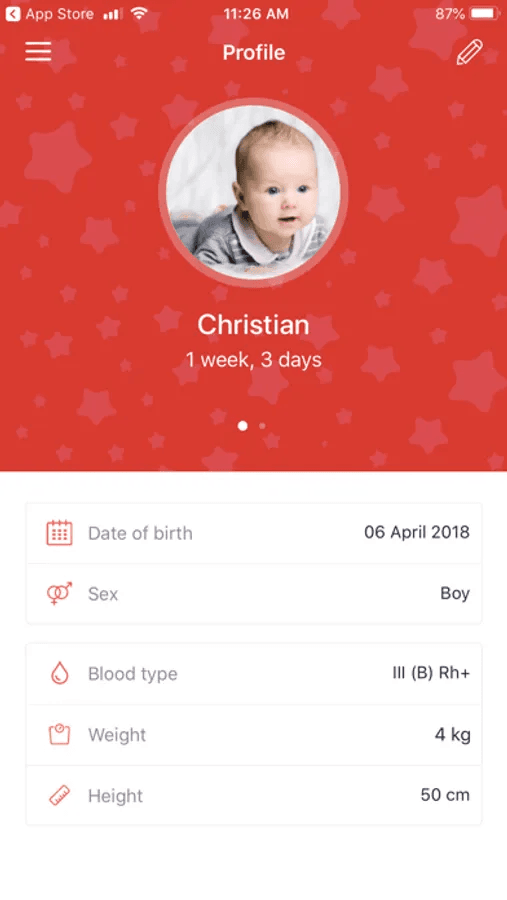
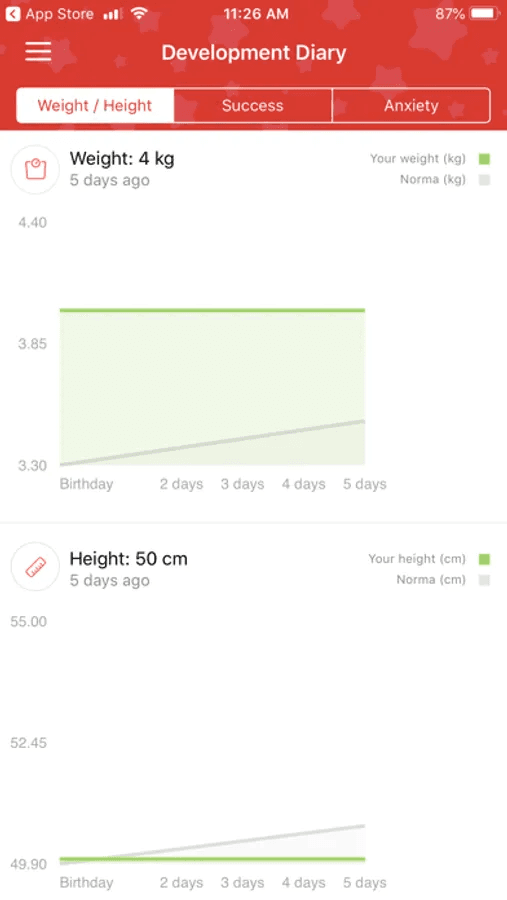
Everything a new parent tracks: feeding and a breastfeeding timer, sleep, medicine, temperature, growth against the norm, a development diary and the vaccination calendar.
For Pediatricians
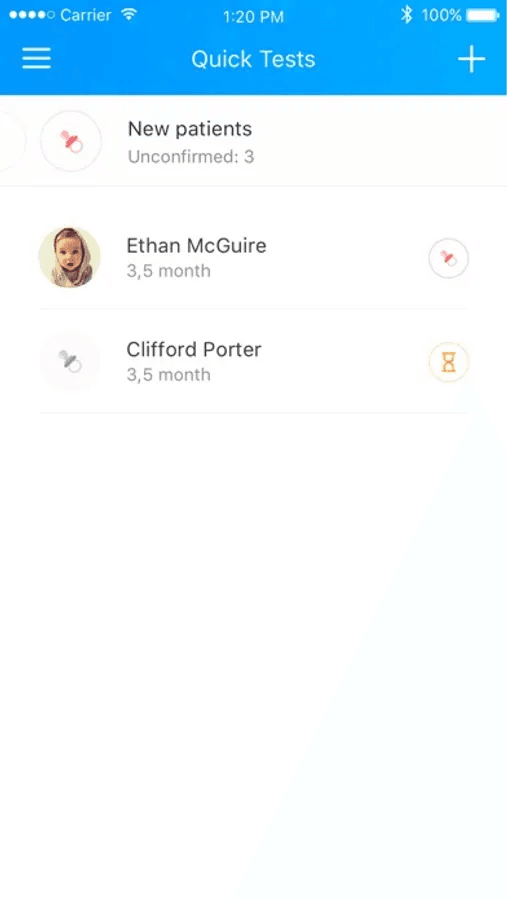
A mobile office: the patient list, each child's record, and the test results that need attention first.
Between Them
A strip read at home reaches the doctor as a result, not as a photo someone has to interpret.
The Challenge
In the first two years a baby cannot say what is wrong, and a urine test means a clinic visit, a collection bag and a wait for the lab. Guarders had solved the collection side with a diaper that carries a test strip. What it needed was the rest of the loop: a way for parents to read the strip at home without guessing at colours, keep the baby's everyday record in one place, and put the result in front of the right doctor quickly enough to matter. A reading that is wrong is worse than no reading at all, so the scan had to hold up against a real laboratory.
What We Did
Built Two Apps Around One Record
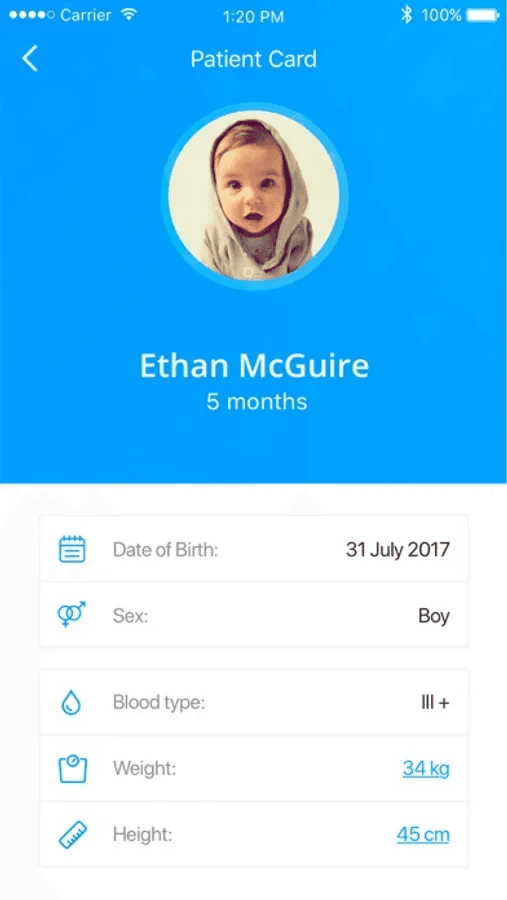
BabyPass for parents and BabyPass Pro for pediatricians share one record of the child. What a parent logs - a feed, a night of sleep, a temperature, a dose of medicine, a test - is what the doctor sees on the patient card, without a phone call or a printout.
Connected Parents and Doctors by Invitation
A doctor and a family are linked only by invitation, and the child's data, test results included, travels between the two apps over a protected channel - not over messengers and email attachments.
Turned the Phone Camera Into a Strip Reader
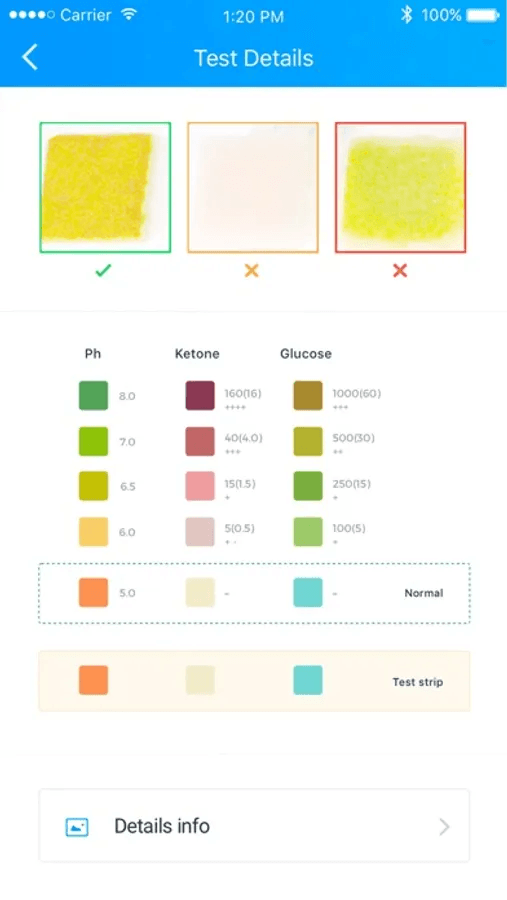
The scanner compares each coloured pad on the test strip with the kit's reference chart and turns it into a value for each of the eight markers the strip covers: specific gravity, leukocytes, blood, protein, pH, glucose, ketones and nitrites. The parent points the camera; the app does the matching that people are bad at.
Checked the Scanner Against a Real Lab
We took part in real laboratory testing: the same samples were analysed by the lab and read by our scanner, and the results were compared side by side. A home reading is only useful if a doctor can trust it.
Flagged Deviations to the Doctor
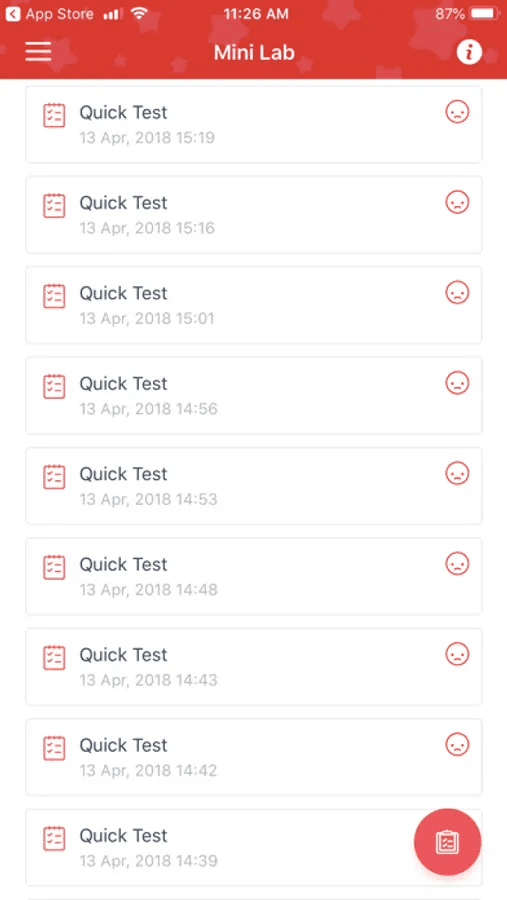
When a test comes back outside the norm, the pediatrician gets a push notification and sees it at the top of the Quick Tests list. From the patient card the doctor can call or email the parent in one tap.
Shipped Natively on Both Platforms
Both apps were built natively - Swift on iOS, Kotlin on Android - on a Node.js backend, and released on the App Store and Google Play.
The Outcome
In a published clinical evaluation, run in outpatient clinics across six regions, 29 pediatricians used BabyPass Pro both to follow healthy children and to pick up abnormal results. All 29 rated it convenient and effective, and 26 of them used every feature rather than only the feeding log. The product ran from 2018 to 2021; the company has since retired it, so the apps are no longer in the stores.
Screens