Appointexo
An AI receptionist for appointment-based businesses, living inside the chat app their clients already use.
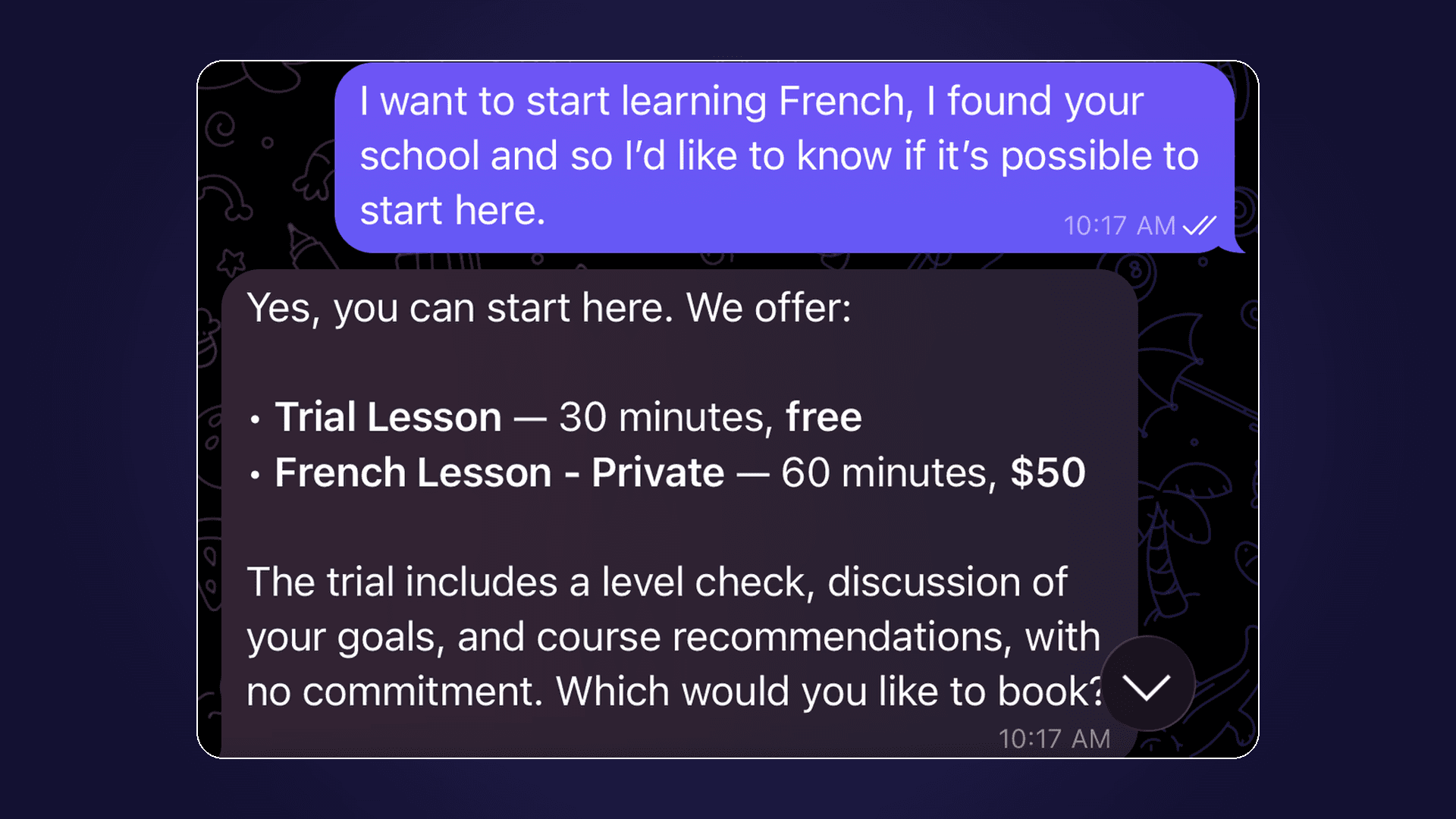
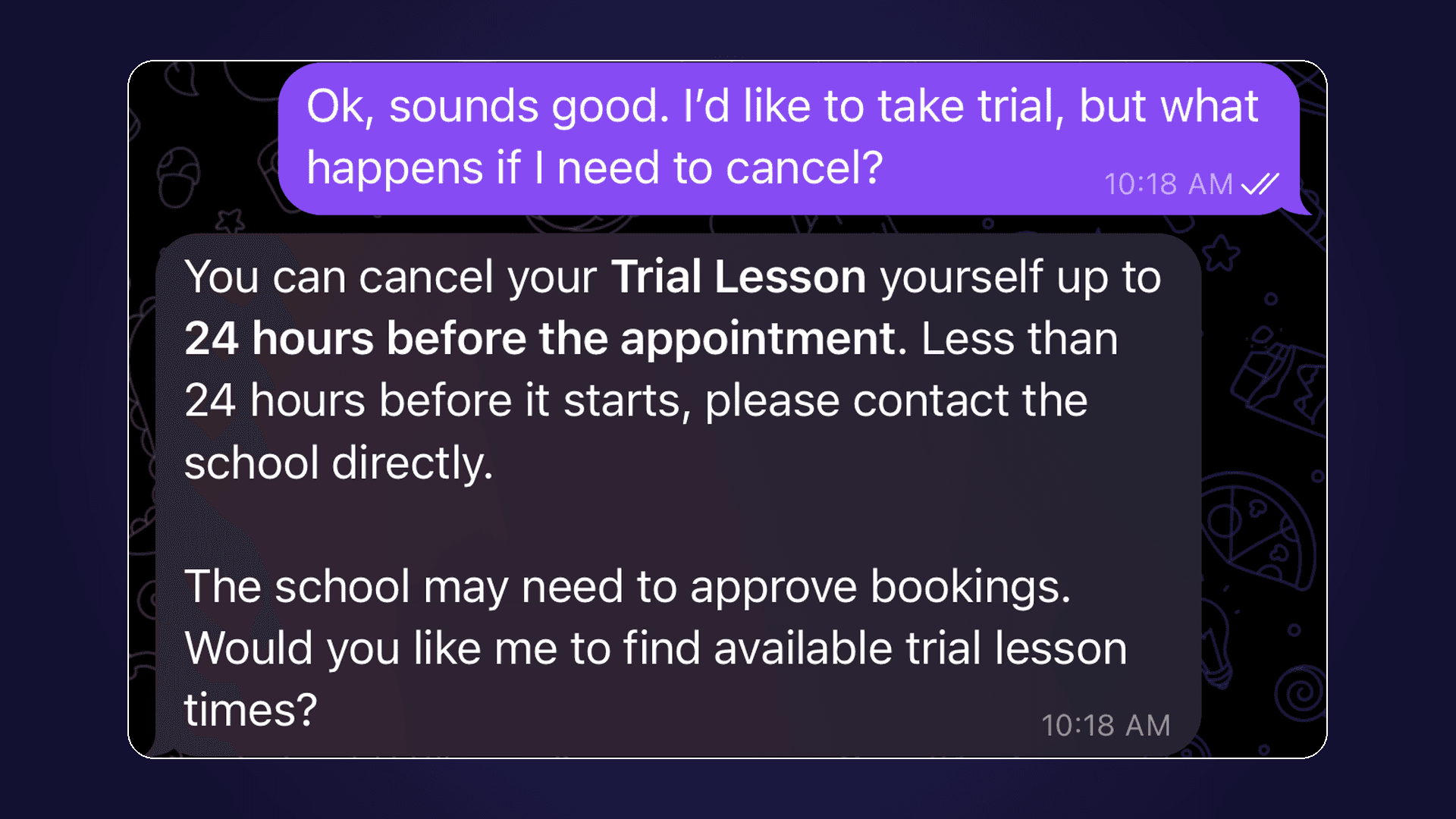
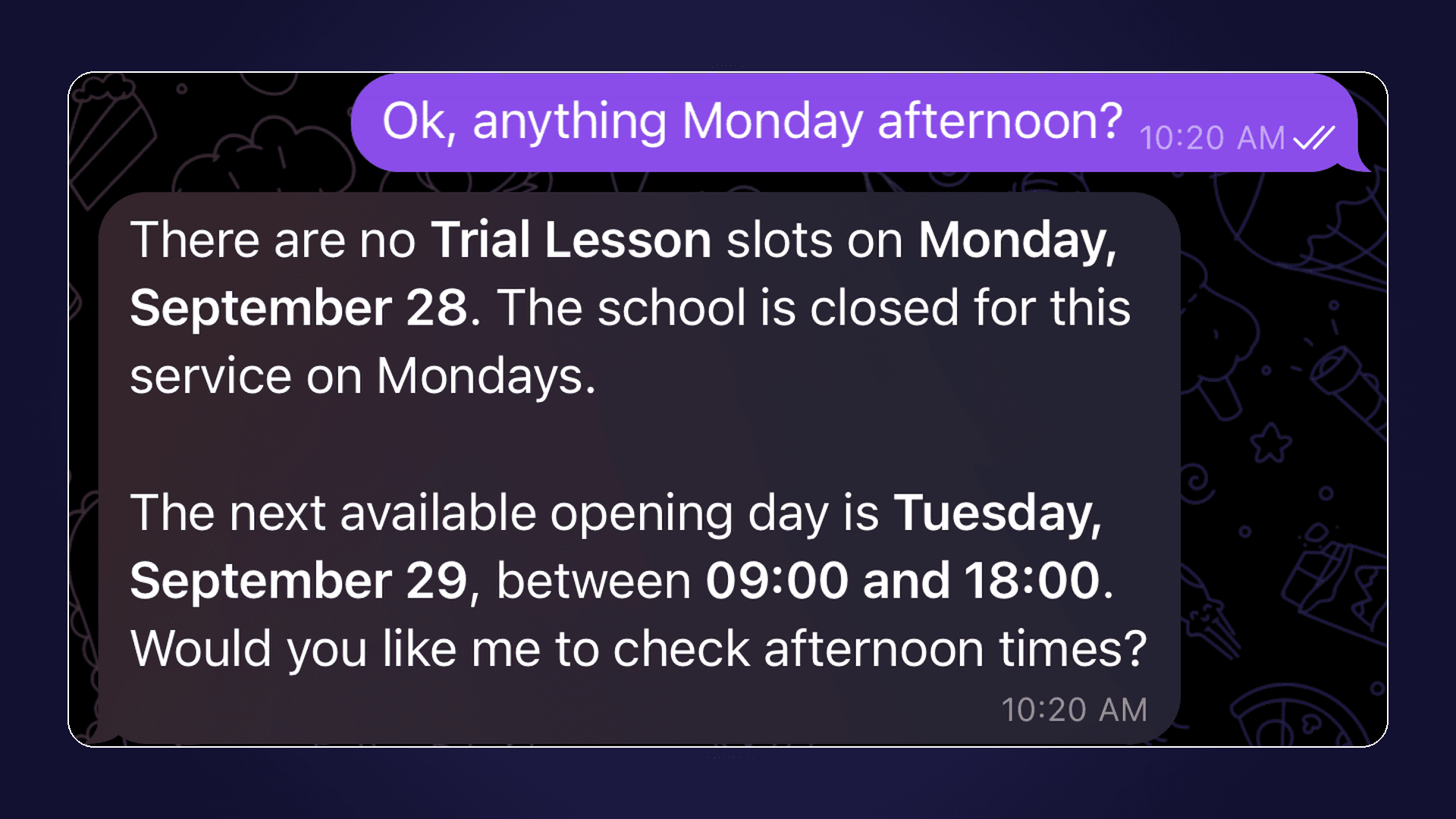
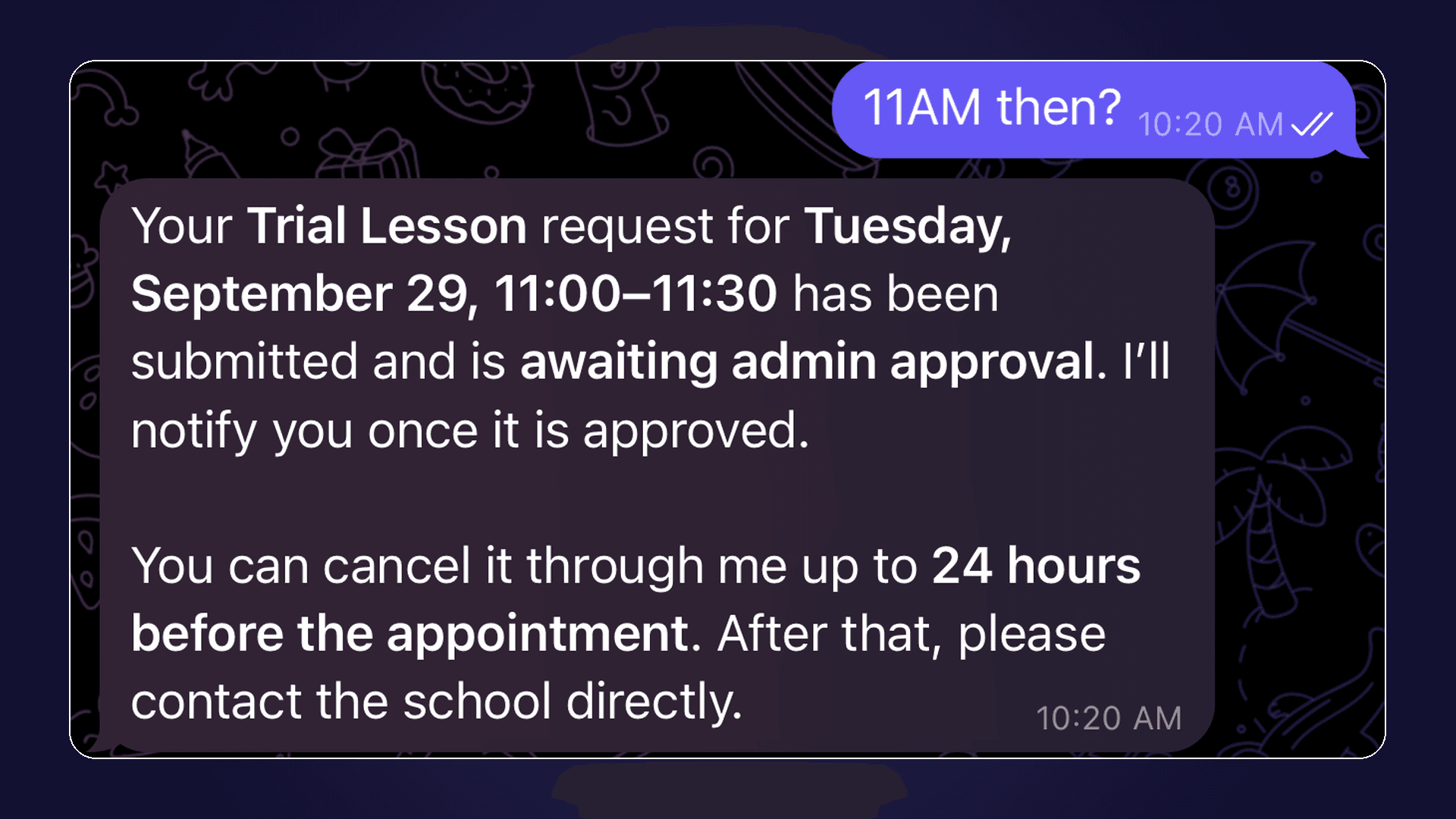
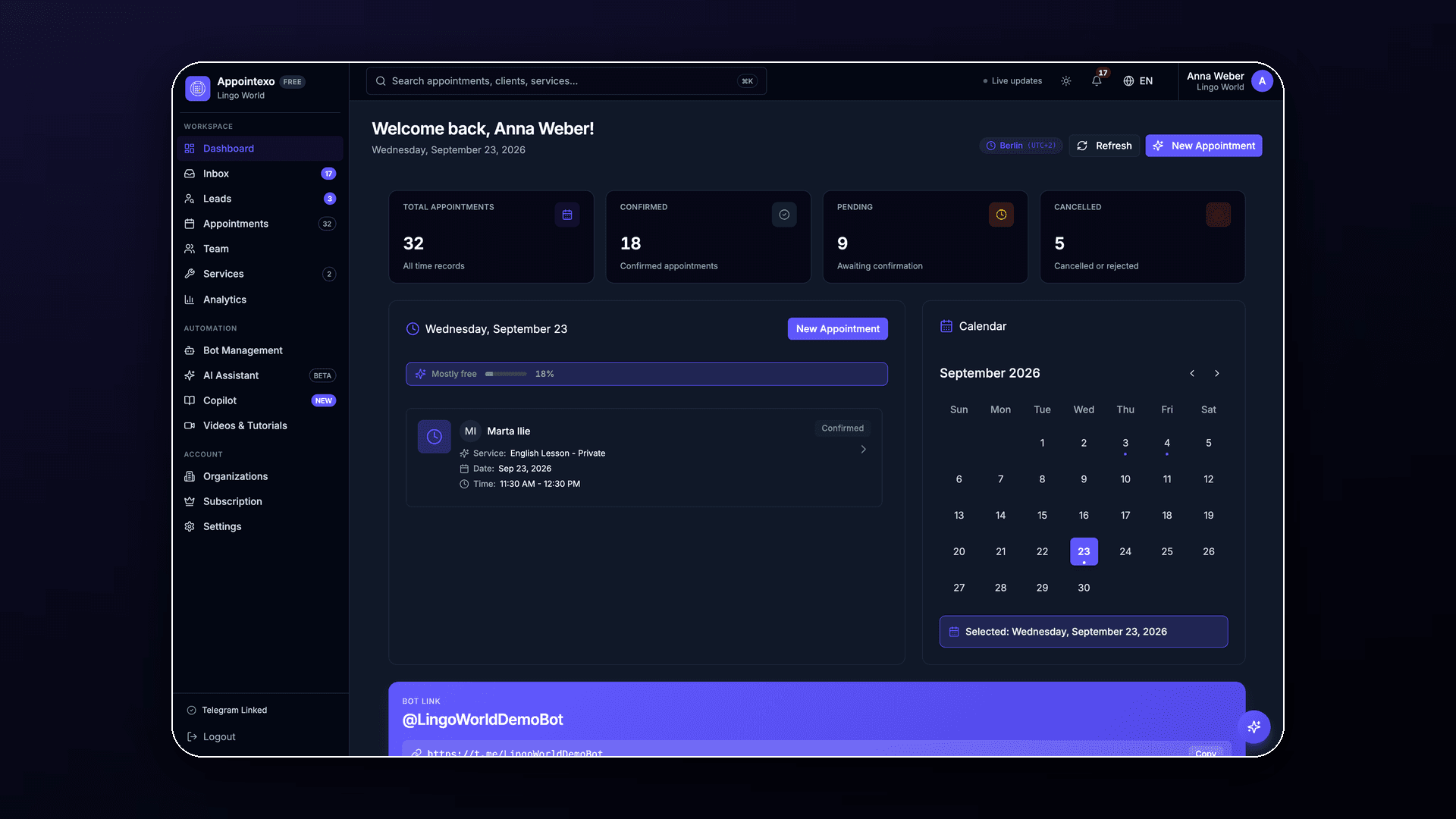
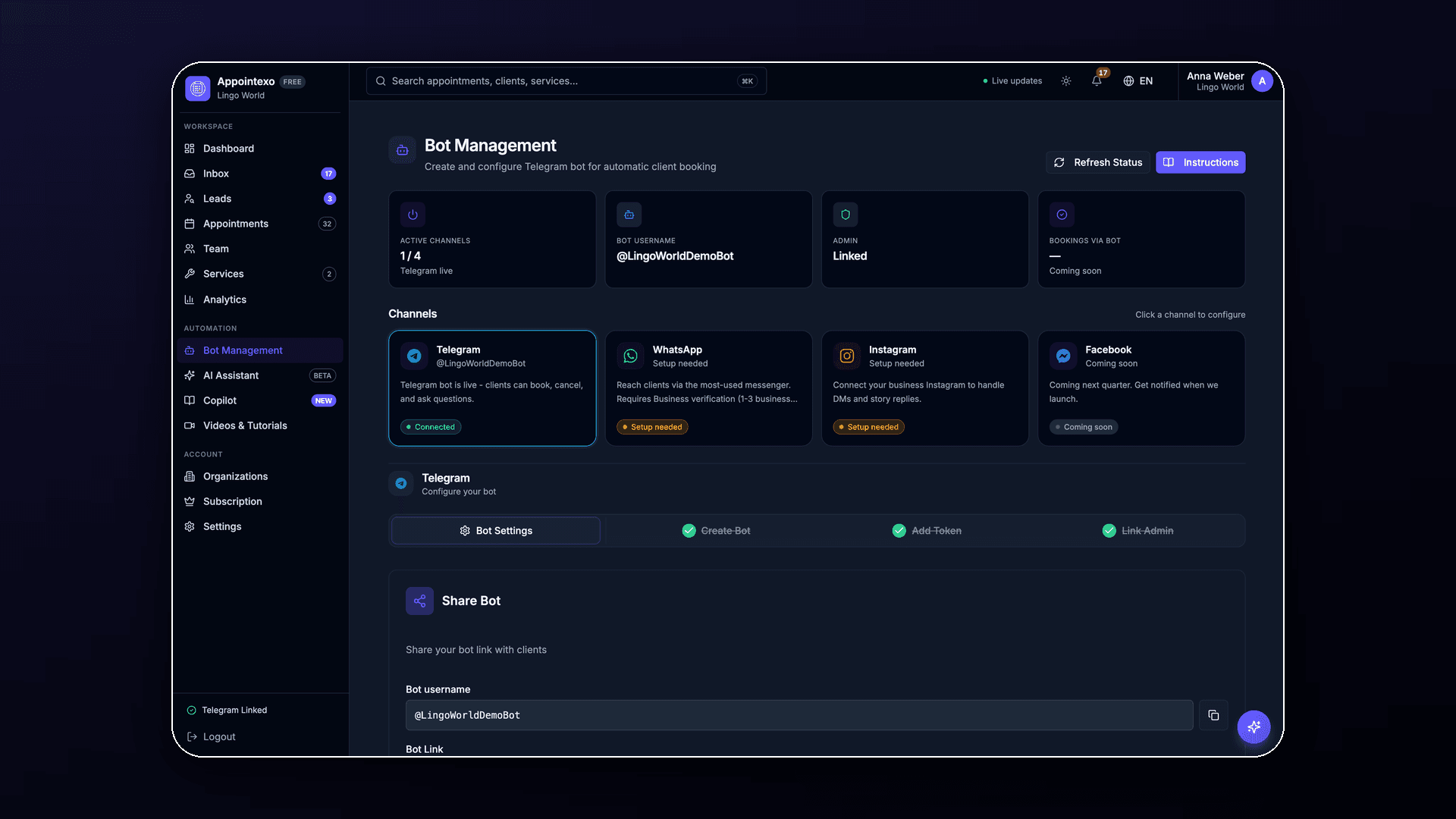
Appointexo is a multi-tenant platform that gives a small service business its own AI receptionist. A clinic or a salon connects its own Telegram bot through the admin panel, and from that moment its clients book, reschedule and ask questions in an ordinary chat. The assistant knows the services, the staff, the opening hours and the cancellation policy, finds a free slot, captures a lead, writes to the owner, and hands the conversation to a person when it should. Owners get a web panel for calendars, staff, services, billing and analytics.
What Makes It a Receptionist
Knows the Business
Services, prices, staff, opening hours, policies and FAQ - per tenant, not per template.
Acts, Not Just Answers
Creates, moves and cancels real appointments, and captures the lead when it cannot.
Knows When to Stop
Hands the conversation to a person instead of improvising. That is the line between a receptionist and a chatbot.
The Challenge
Small service businesses lose bookings in the gaps. Messages arrive after closing time, on a day off, or while the only person who could answer is with a client. The owner ends up answering the same handful of questions - what does it cost, who is free on Thursday, can I move my appointment - dozens of times a week. Booking widgets solve none of this: they hand the client a form instead of an answer, and most people abandon them. The product had to hold a real conversation, be trusted with a live calendar, and never leave a client stuck with a machine that cannot help.
What We Did
Positioned It as a Receptionist, Not a Bot
The assistant carries twenty tools: it lists services and explains policies, knows who is on shift, finds and suggests slots, books, reschedules and cancels, captures a lead, messages the owner, and escalates to a human. "Booking bot" describes about two of them, so the product, the interface and the copy were all built around the wider job.
Built the Assistant Against a Live Calendar
Booking, rescheduling and cancelling are real operations on a real schedule, so the assistant acts through a defined set of tools rather than free-form text. It is told plainly what it does not know, which makes it call a tool instead of answering from memory, and it escalates to the owner rather than improvising when a request falls outside what it can do.
Measured the Assistant Instead of Guessing
We built an evaluation harness that replays twenty-eight scripted scenarios and reports tokens and seconds for every client message. Every prompt change, tool change and model change is judged on those numbers. It is how we established that the better-writing model was the more expensive one, and how a payload change paid for itself.
Shipped It as a Multi-Tenant Product
Each business connects its own bot and owns its own data, staff, services, policies and plan. The panel covers onboarding, calendars, staff, services, FAQ, notifications, subscription billing and analytics, with per-plan usage limits enforced in code rather than in copy.
Localized It and Made Consent Regional
The public product ships in sixteen languages. Consent follows the visitor: inside the EU measurement is blocked until a choice is made, everywhere else it starts with a clearly offered way out.
The Outcome
Appointexo is live, with 65+ businesses signed up and paying customers running on it. Small businesses that used to take bookings in a paper diary and on the phone now have a receptionist in chat that answers around the clock: a business connects its bot, configures its services and staff, and its clients start booking the same day. The assistant is versioned and measured like any other part of the system, so its cost and its behavior are known numbers rather than impressions.
Screens